
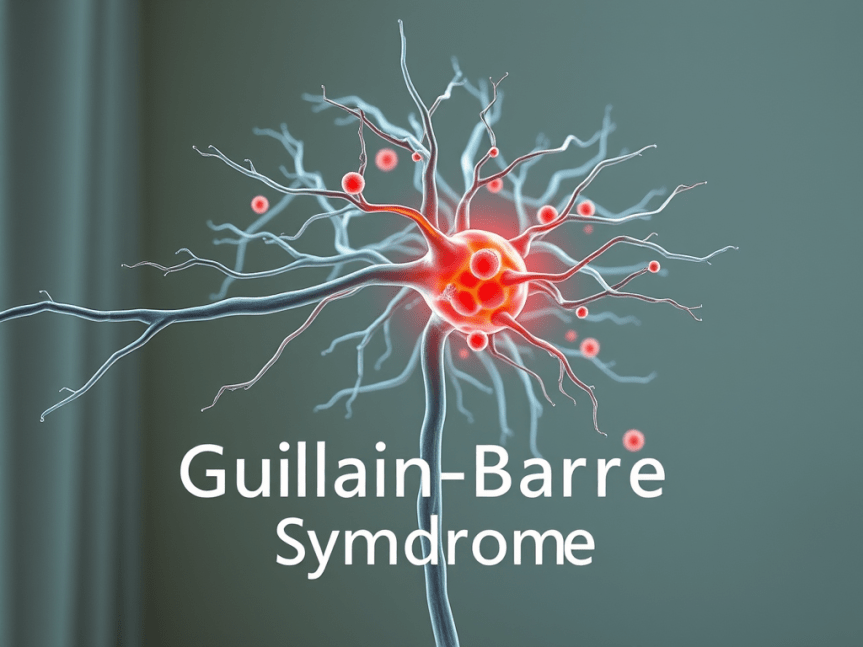
Guillain-Barré Syndrome (GBS) is a rare but serious condition. It affects the nerves, leading to muscle weakness and numbness. In severe cases, it can cause paralysis. It is usually triggered by an infection and can progress rapidly, making early recognition crucial.
What is Guillain-Barré Syndrome (GBS)?
GBS is an autoimmune disorder in which the body’s immune system mistakenly attacks the nerves. This damages the nerves’ protective covering (myelin sheath). It disrupts signals between the brain and muscles. This leads to weakness and loss of sensation.
What Causes GBS?
GBS can develop after:
🔹 Respiratory or Gastrointestinal Infections – Common triggers include flu or bacterial infections like Campylobacter jejuni (which causes food poisoning).
🔹 Viral Infections – Viruses such as influenza, Epstein-Barr virus (EBV), Zika virus, and COVID-19 have been linked to GBS.
🔹 Post-Surgical Cases – In rare cases, GBS occurs after major surgery.
🔹 Vaccinations – Extremely rare cases have been associated with vaccines. However, the risk is far lower than the risk of infection-related complications.
GBS is NOT contagious. It cannot spread from one person to another.
How to Identify GBS? When to See a Doctor?
GBS symptoms usually start mildly but worsen over time. Seek immediate medical attention if you experience:
✅ Tingling or Numbness – Especially in the feet or hands, spreading upwards.
✅ Weakness in the Legs or Arms – Difficulty walking, climbing stairs, or holding objects.
✅ Loss of Reflexes – Slower or absent reflexes when tested.
✅ Difficulty Speaking, Swallowing, or Breathing – In severe cases, facial muscles and breathing can be affected.
✅ Persistent Pain – Aching or shooting pain in the back, legs, or arms.
✅ Fast Progression – Symptoms worsening over hours or days.
🚨 Warning Signs of Severe GBS (Medical Emergency):
⚠️ Difficulty breathing
⚠️ Paralysis spreading upwards
⚠️ Trouble swallowing or speaking
If you notice any of these signs, go to a hospital immediately! Early treatment can prevent serious complications.
How is GBS Diagnosed?
Doctors use the following tests to confirm GBS:
🩺 Neurological Exam – Checking reflexes, muscle strength, and sensation.
💉 Lumbar Puncture (Spinal Tap) – A sample of spinal fluid is tested for specific changes seen in GBS.
⚡ Nerve Conduction Study (NCS) & Electromyography (EMG) – These tests measure nerve and muscle function.
🧪 Blood Tests – To rule out other conditions.
Complications of GBS
Although most people recover from GBS, it can lead to serious complications, including:
⚠️ Respiratory Failure – If paralysis reaches the chest muscles, a ventilator may be needed.
⚠️ Chronic Weakness – Some people may take months or years to regain full strength.
⚠️ Heart and Blood Pressure Issues – GBS can affect the autonomic nervous system. This can lead to irregular heartbeats. It may also cause blood pressure fluctuations.
⚠️ Long-term Pain – Nerve damage may cause ongoing discomfort in some cases.
How is GBS Treated?
There is no cure for GBS, but early treatment helps recovery. The main treatments include:
💉 Plasma Exchange (Plasmapheresis) – Removes harmful antibodies from the blood.
💉 Intravenous Immunoglobulin (IVIG) – A therapy that helps neutralize the immune attack on nerves.
💪 Physical Therapy – Helps regain strength, balance, and movement.
Most patients recover within a few months to a year, but some may have lingering weakness or fatigue.
How to Prevent GBS?
While GBS itself cannot be directly prevented, you can reduce your risk by:
✅ Practicing Good Hygiene – Wash hands frequently and avoid contaminated food or water.
✅ Getting Timely Vaccinations – Prevent infections that may trigger GBS.
✅ Seeking Early Medical Care – Treat infections promptly to reduce complications.
Common Myths vs. Facts About GBS
🚫 Myth: GBS is contagious.
✅ Fact: It is an autoimmune reaction, not an infection, so it does not spread from person to person.
🚫 Myth: Vaccines frequently cause GBS.
✅ Fact: GBS after vaccination is extremely rare. Vaccines prevent far more illnesses than they cause.
🚫 Myth: People never recover from GBS.
✅ Fact: Most people make a full recovery, although some may have lingering weakness.
Final Takeaway
GBS is rare but serious. Early detection is key! If you or someone you know experiences sudden weakness, tingling, or difficulty breathing, seek medical attention immediately. With timely treatment, most people recover and return to normal life. Stay informed, stay safe!
Discover more from LBS Healthcare
Subscribe to get the latest posts sent to your email.
