
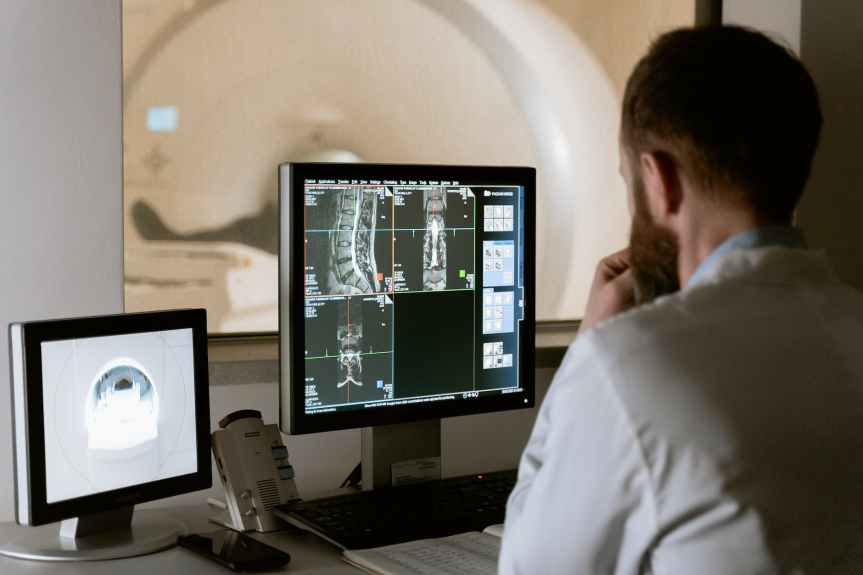
Heart health is of paramount importance, and diagnosing any potential issues is crucial for maintaining overall well-being. When it comes to assessing the health of your heart’s blood vessels, two commonly used imaging techniques are CT Coronary Angiography (CTCA) and Conventional Coronary Angiography (CAG). While both serve the same purpose, they differ in terms of procedure, advantages, and suitability for different situations.
CT Coronary Angiography (CTCA):
CT Coronary Angiography, often referred to as CTCA or CT angiogram, is a non-invasive imaging technique that uses a computed tomography (CT) scanner to produce detailed images of the coronary arteries – the blood vessels that supply the heart with oxygen-rich blood. CTCA is particularly useful for detecting the presence of coronary artery disease, blockages, and narrowing of blood vessels. It involves injecting a contrast dye into a vein and using a specialized CT scanner to capture cross-sectional images of the heart and its blood vessels.
Advantages of CTCA:
- Non-invasive: CTCA does not require any surgical incisions or catheter insertion, making it a safer and less invasive option.
- Quick Procedure: The procedure is relatively quick, typically lasting around 10 to 15 minutes.
- Low Risk: CTCA carries a lower risk of complications compared to conventional coronary angiography.
- Outpatient Procedure: CTCA is often performed on an outpatient basis, allowing patients to return home the same day.
Conventional Coronary Angiography (CAG):
Conventional Coronary Angiography, also known as cardiac catheterization or coronary angiogram, is an invasive procedure that involves threading a catheter through a blood vessel, usually from the groin or wrist, up to the coronary arteries. A contrast dye is injected through the catheter, and X-ray images are captured as the dye flows through the coronary arteries. CAG provides highly detailed images and allows doctors to directly visualize blood flow and potential blockages.
Advantages of CAG:
- Highly Accurate: CAG provides real-time and high-resolution images of the coronary arteries, enabling precise assessment of blockages.
- Therapeutic Potential: During CAG, certain treatments like angioplasty or stent placement can be performed immediately if a blockage is detected.
- Gold Standard: CAG is often considered the gold standard for diagnosing coronary artery disease and complex cardiac conditions.
Which One Should You Choose?
The choice between CTCA and CAG depends on various factors, including your medical condition, risk factors, and the purpose of the examination:
- Routine Screening: For individuals with low to moderate risk factors and no significant symptoms, CTCA may be a suitable initial screening tool due to its non-invasive nature.
- High-Risk Patients: If you have known risk factors or symptoms of heart disease, your doctor might recommend CAG for its ability to provide detailed and immediate information, allowing for on-the-spot interventions if necessary.
- Specific Clinical Scenarios: In some cases, both CTCA and CAG may be used together to gather comprehensive information. For instance, CTCA can be used as a prelude to CAG to guide decision-making.
- Individualized Approach: Your healthcare provider will assess your unique situation and help you decide which test is most appropriate based on your medical history and current condition.
| Aspect | CT Coronary Angiography (CTCA) | Conventional Coronary Angiography (CAG) |
|---|---|---|
| Procedure Type | Non-invasive imaging | Invasive procedure |
| Method | Uses CT scanner and contrast dye | Involves catheter and X-ray imaging |
| Incision/Catheter Insertion | No surgical incision or catheter | Catheter inserted via groin or wrist |
| Imaging Process | Cross-sectional images of heart | Real-time X-ray images of arteries |
| Blockage Detection | Detects blockages and narrowing | Precise assessment of blockages |
| Risk of Complications | Lower risk | Slightly higher risk |
| Procedure Duration | Typically 10-15 minutes | Typically 10-15 minutes, procedure planning may take slightly longer time |
| Outpatient/Inpatient | Often outpatient | Usually requires short hospital stay |
| Immediate Interventions Possible | Not during procedure | Angioplasty/stent placement possible |
| Radiation Exposure | Involves radiation exposure | Involves radiation exposure |
| Heart Rate | Requires Lower heart rate for good quality images | Can be done on higher heart rate as well |
| Overall Suitability | Screening for low to moderate risk | High-risk patients or detailed cases |
| Follow-up Procedures | May require additional testing | Immediate treatment if necessary |
| Gold Standard for Diagnosis | No | Yes |
| Decision-making Guidance | Often used as a preliminary step | Provides comprehensive assessment |
| Patient Comfort | Less discomfort and quick procedure | Potential discomfort, longer procedure |
| Cost | Almost same | Almost same but slightly higher than CTCA |
When it comes to assessing the health of your coronary arteries, both CT Coronary Angiography and Conventional Coronary Angiography have their advantages. The choice between the two depends on individual circumstances, risk factors, and the information your healthcare provider seeks. Regardless of the method chosen, these advanced imaging techniques play a vital role in diagnosing and managing heart-related conditions, ensuring that you receive the best possible care for your heart health. Always consult your healthcare provider to determine the most suitable option based on your medical needs.
Discover more from LBS Healthcare
Subscribe to get the latest posts sent to your email.
