
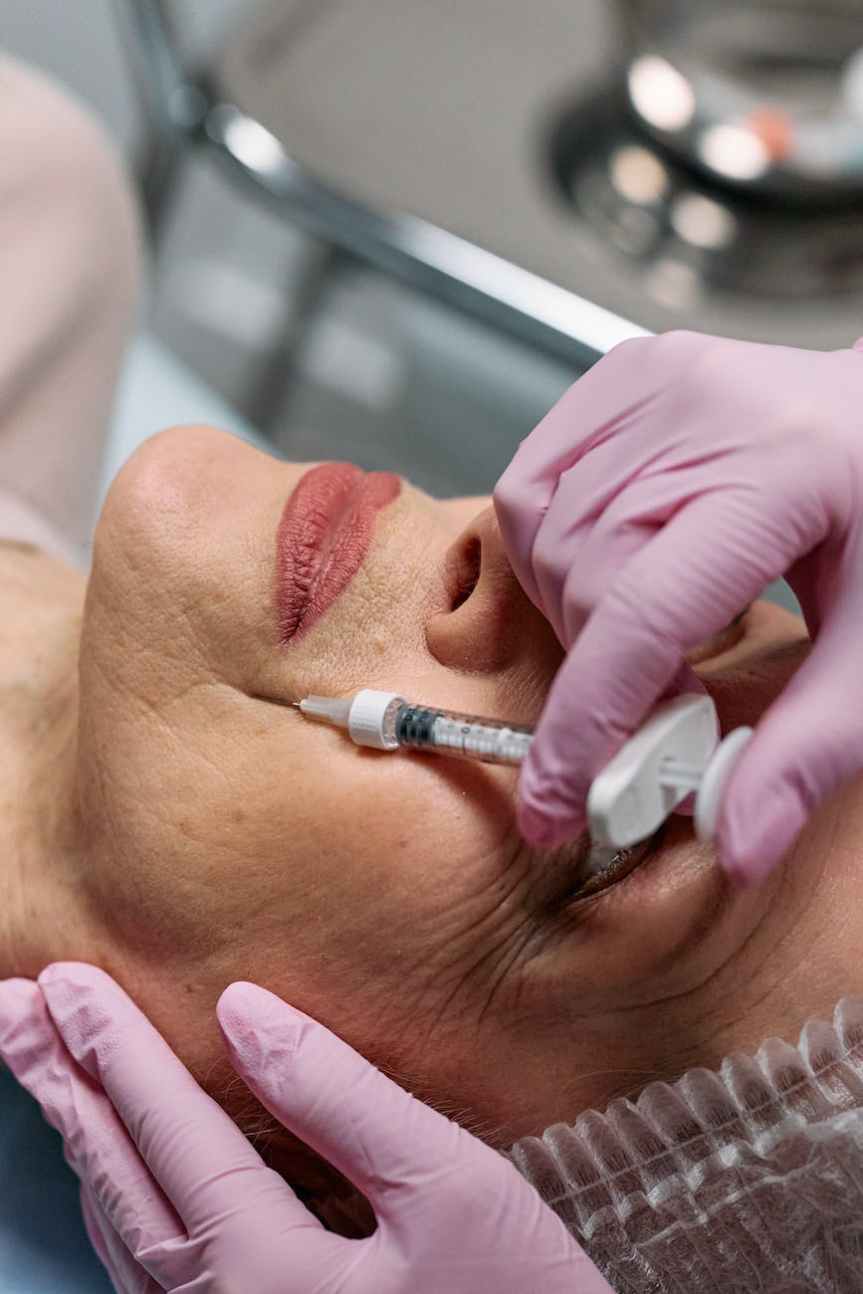
In the quest for a more youthful appearance and smoother skin, two popular cosmetic treatments have emerged as go-to solutions—Botox and dermal fillers. Both options offer effective ways to address signs of aging, but they work in distinct ways to achieve different outcomes. Understanding the differences between Botox and dermal fillers can help individuals make informed decisions about which treatment aligns best with their aesthetic goals.
Botox:
Freezing Wrinkles and Softening Lines Botox, short for Botulinum Toxin, is a neurotoxic protein derived from the bacterium Clostridium botulinum. This injectable treatment is specifically designed to reduce the appearance of wrinkles and lines caused by facial muscle movement. Botox works by temporarily blocking nerve signals to targeted muscles, which leads to muscle relaxation. As a result, the overlying skin smoothes out, and dynamic wrinkles, such as forehead lines, frown lines, and crow’s feet, become less noticeable.
Main Features of Botox:
- Targets dynamic wrinkles caused by facial expressions.
- Temporarily paralyzes muscles to prevent wrinkle formation.
- Most commonly used for forehead lines, frown lines, and crow’s feet.
- Results typically last around 3 to 4 months.
- Quick procedure with minimal downtime and virtually painless.
Dermal Fillers:
Restoring Volume and Enhancing Contours Dermal fillers, on the other hand, are injectable substances used to add volume, fill in wrinkles, and enhance facial contours. Unlike Botox, which targets muscle activity, dermal fillers address static wrinkles and areas of the face where volume has been lost due to aging. They are typically made from substances like hyaluronic acid, calcium hydroxylapatite, or poly-L-lactic acid, which are either naturally occurring in the body or biocompatible.
Main Features of Dermal Fillers:
- Addresses static wrinkles and areas with volume loss.
- Restores lost volume and stimulates collagen production.
- Commonly used for cheek augmentation, lip enhancement, and nasolabial folds.
- Results can last several months to 1-2 years, depending on the filler type.
- Immediate or near-immediate results with minimal downtime.
Key Differences Summarized:
| Botox | Dermal Fillers |
|---|---|
| Targets dynamic wrinkles | Addresses static wrinkles and volume loss |
| Temporarily paralyzes muscles | Restores lost volume and stimulates collagen production |
| Used for forehead lines, frown lines, crow’s feet | Commonly used for cheek augmentation, lip enhancement, and nasolabial folds |
| Results last around 3 to 4 months | Results can last several months to 1-2 years |
| Quick procedure with minimal downtime | Immediate or near-immediate results with minimal downtime |
Choosing Between Botox and Dermal Fillers:
The choice between Botox and dermal fillers depends on individual cosmetic concerns and desired outcomes. For individuals looking to reduce wrinkles caused by facial expressions, Botox may be the ideal choice. On the other hand, those seeking to restore volume to areas with hollowing or sagging may find dermal fillers more suitable. Some individuals may benefit from a combination of both treatments to achieve comprehensive facial rejuvenation.
Botox and dermal fillers are valuable tools in the world of cosmetic enhancement, each serving unique purposes in addressing signs of aging. By understanding the differences between Botox and dermal fillers, individuals can make well-informed decisions and work with qualified healthcare professionals to develop personalized treatment plans. Whether it’s softening dynamic wrinkles or restoring lost volume, both options offer effective and safe ways to enhance natural beauty and achieve a more youthful appearance.
Discover more from LBS Healthcare
Subscribe to get the latest posts sent to your email.
