
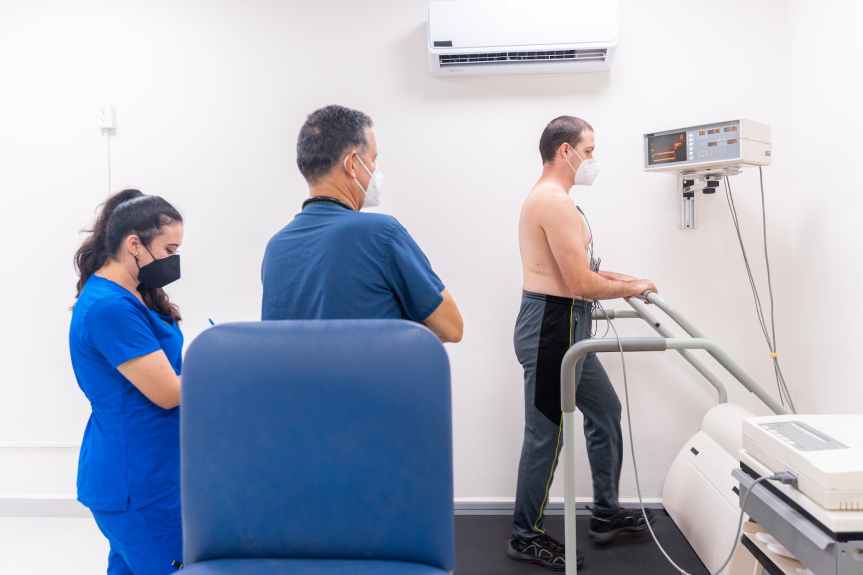
Stress tests are diagnostic procedures that assess how the heart performs under physical stress. They provide valuable insights into cardiovascular health, helping healthcare professionals diagnose heart conditions, evaluate exercise capacity, and monitor treatment effectiveness.
Understanding Stress Tests:
A stress test, commonly known as an exercise tolerance test or treadmill test, involves monitoring the heart’s response to physical stress while exercising. It helps determine how well the heart functions during increased activity levels, allowing healthcare professionals to evaluate heart rate, blood pressure, electrical activity, and symptoms during exercise.
Types of Stress Tests:
- Exercise Electrocardiogram (ECG) Stress Test: This is the most common type of stress test, and popularly known as TMT or Treadmill test. It involves walking on a treadmill or pedaling a stationary bike while being closely monitored. Electrodes are attached to the chest to record the heart’s electrical activity. The test gradually increases in intensity, and the individual is monitored for changes in heart rhythm, blood pressure, and symptoms.
- Nuclear Stress Test: This test utilizes a radioactive dye (tracer) to evaluate blood flow to the heart during exercise. The tracer is injected into the bloodstream, and a special camera captures images of the heart at rest and during exercise. This test provides information about areas of the heart with reduced blood flow and can help diagnose coronary artery disease.
- Stress Echocardiogram: Also known as an echocardiography stress test, this procedure combines a traditional echocardiogram with exercise. Ultrasound images of the heart are taken before and immediately after exercise to assess changes in heart structure, function, and blood flow. It helps identify areas of the heart that may not be receiving adequate blood supply.
- Dobutamine Stress Echocardiogram: Also known as DSE. For those patients, who have difficulty in doing exercise due to any medical condition or frailty, Dobutamine is used to increase the heart rate and then Ultrasound images of the heart are taken before and immediately after target heart rate is achieved by infusing Dobutamine to assess changes in heart function and blood flow.
- Stress Cardiac Magnetic Resonance Imaging (MRI): This test uses magnetic fields and radio waves to create detailed images of the heart at rest and during exercise. It provides information about blood flow, heart structure, and function. Stress cardiac MRI is particularly useful for individuals who are unable to perform exercise-based stress tests.
The Importance of Stress Tests:
Stress tests serve several crucial purposes in heart health assessment:
- Diagnosis of Heart Conditions: Stress tests are used to diagnose heart conditions such as coronary artery disease, heart rhythm abnormalities, and heart valve problems. They help identify reduced blood flow to the heart, abnormal heart rhythms, or other signs of underlying heart disease that may not be apparent at rest.
- Evaluation of Exercise Capacity: Stress tests assess an individual’s exercise capacity and cardiovascular fitness. They provide valuable information about heart rate response, blood pressure changes, and symptoms experienced during exercise. This information aids in determining the appropriate exercise regimen and assessing overall cardiovascular health.
- Treatment Monitoring: Stress tests help monitor the effectiveness of interventions, such as medications, lifestyle modifications, or cardiac procedures. By comparing pre- and post-treatment stress test results, healthcare professionals can evaluate improvements in blood flow, symptom reduction, or restoration of normal heart function.
- Risk Stratification: Stress tests assist in identifying individuals at higher risk of future heart events. Abnormal stress test results may indicate an increased risk of heart-related complications, prompting healthcare providers to implement more aggressive treatment strategies or preventive measures.
Stress tests are invaluable tools for assessing heart health and diagnosing cardiovascular conditions. They provide critical information about how the heart performs under physical stress, aiding in the diagnosis, treatment, and monitoring of heart-related conditions. Whether it’s the exercise electrocardiogram stress test, nuclear stress test, stress echocardiogram, or stress cardiac MRI, each type of stress test offers unique insights into heart function and blood flow. If recommended by your healthcare provider, undergoing a stress test can provide important information about your heart health and guide appropriate management strategies for a healthier cardiovascular system.
Discover more from LBS Healthcare
Subscribe to get the latest posts sent to your email.
