
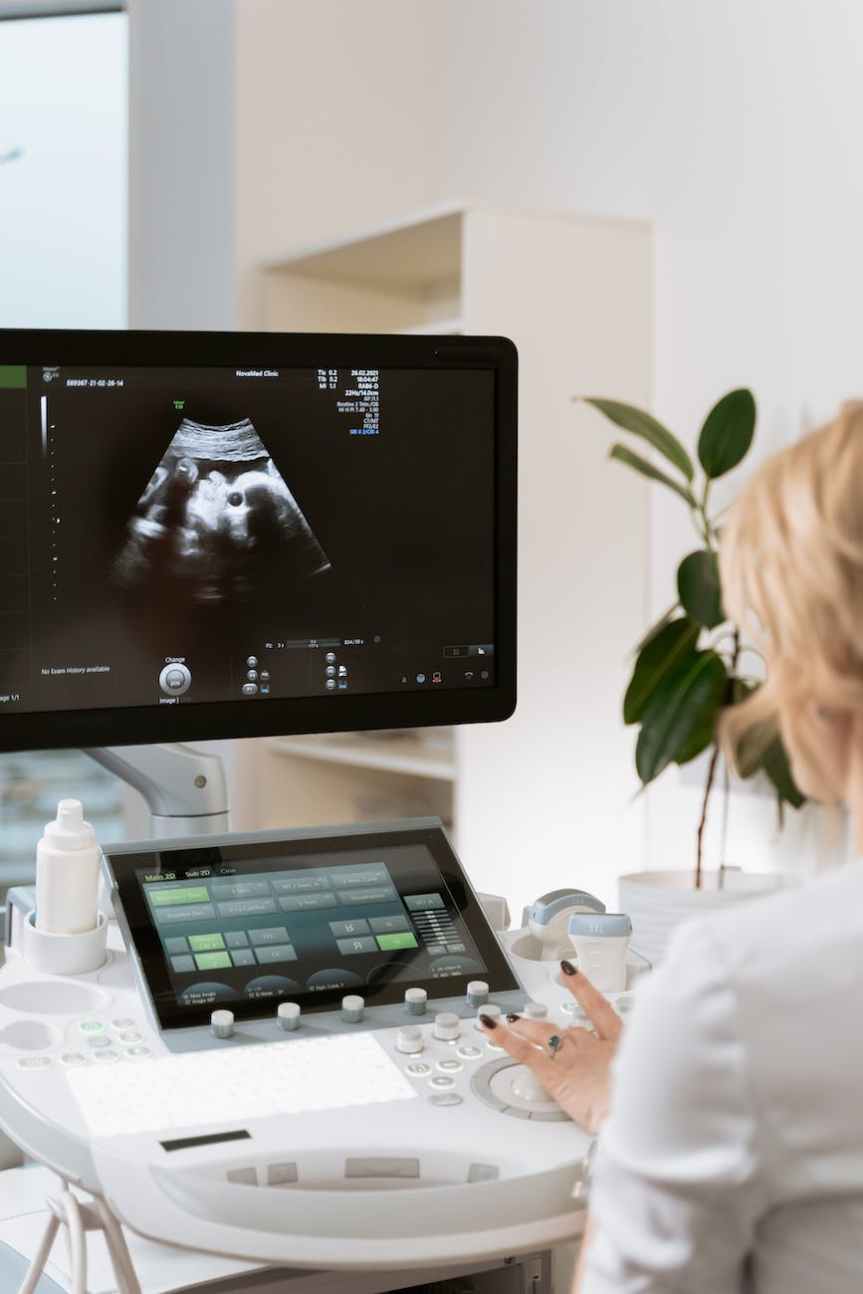
Echocardiography is a medical imaging technique that allows healthcare professionals to visualize and evaluate the structure and function of the heart using sound waves. It provides valuable information about the heart’s chambers, valves, blood flow, and overall cardiac health.
What is Echocardiography?
Echocardiography, often referred to as an “echo,” is a non-invasive diagnostic test that uses ultrasound waves to create real-time images of the heart. It involves placing a small device called a transducer on the chest, which emits sound waves and detects the echoes as they bounce off the heart’s structures. These echoes are then processed by a computer to generate detailed images of the heart in motion.
As a layman we can understand it better by looking at the concept of Ultrasound. At some point or the other, you may had an ultrasound of your abdomen which is commonly called as Ultrasound. Similarly, Ultrasound of the Heart is labelled as Echocardiography
Purpose and Procedure: Echocardiography serves various purposes, including:
- Assessing heart structure and function: Echocardiograms provide valuable information about the size, shape, and movement of the heart’s chambers, valves, and walls. It helps doctors identify abnormalities, such as enlarged chambers, thickened walls, or valve malfunctions.
- Evaluating blood flow: Doppler ultrasound, a part of echocardiography, enables the assessment of blood flow through the heart and major blood vessels. It helps detect conditions like valve regurgitation (leakage) or stenosis (narrowing), as well as abnormalities in blood flow patterns.
- Diagnosing heart conditions: Echocardiography is instrumental in diagnosing various heart conditions, including heart attacks, heart failure, congenital heart defects, and heart valve diseases. It provides valuable information for determining the appropriate treatment plan.
- Monitoring cardiac health: Echocardiograms are frequently used to monitor the progression of heart conditions and evaluate the effectiveness of treatment over time. They help doctors track changes in heart function, assess the response to medications, or determine the need for further interventions.
Benefits and Safety: Echocardiography offers several advantages as a diagnostic tool:
- Non-invasive: It is a non-invasive procedure, meaning it does not require any surgical incisions or catheter insertions. The transducer is simply placed on the chest, minimizing discomfort and risks associated with invasive procedures.
- Painless and radiation-free: Echocardiography does not involve exposure to radiation, making it a safe imaging technique for individuals of all ages, including pregnant women and children.
- Real-time imaging: Echocardiograms provide immediate visualizations of the heart’s structures and function, allowing doctors to make quick and accurate assessments during the examination.
- Versatility: Echocardiography can be performed using different approaches, such as transthoracic echocardiography (TTE), transesophageal echocardiography (TEE), or stress echocardiography, depending on the specific diagnostic needs of the patient.
Echocardiography is a valuable tool in the field of cardiology, providing detailed information about the heart’s structure, function, and blood flow. It aids in the diagnosis and monitoring of various heart conditions, allowing healthcare professionals to make informed decisions regarding treatment plans. As a non-invasive and safe procedure, echocardiography plays a crucial role in ensuring the early detection, accurate diagnosis, and effective management of heart diseases. If recommended by your healthcare provider, an echocardiogram can provide valuable insights into your cardiac health, contributing to your overall well-being.
Discover more from LBS Healthcare
Subscribe to get the latest posts sent to your email.

One thought on “Echocardiography: Looking into Your Heart”